Cats – When the Akademie Immling Takes the Spotlight

You may read this text with a certain amused frown – "Cats"? Between Verdi, Puccini, and Mozart? At an opera festival? I admit, I hesitated briefly before realizing why exactly this musical belongs here. I have a very special connection to the annual Immling musical anyway: I had the opportunity to assist as a director during "Footloose" – and since then, I have been looking at what happens behind the scenes of the musical with a different, perhaps more affectionate perspective when I sit in the audience. As always, what follows is my very personal, unvarnished opinion – this time with a focus on our wonderful young talents.
There are works that do not need a plot to achieve worldwide fame. "Cats" is one such case. If you find yourself asking after the performance, "but what was it actually about?" – congratulations, you have understood the piece perfectly. Because "Cats" does not have a plot in the classical sense. It has a gathering, a night, a decision – and a heaven that is reached in a rather quirky way.
The Plot – or: Why Cats Gather Once a Year
Once a year, the Jellicle cats gather for the "Jellicle Ball" to celebrate together, introduce themselves, dance – and in the end, the old, wise cat Old Deuteronomy chooses one of them to ascend to the "Heaviside Layer" to be reborn there. And isn't that, when you pause for a moment, the perfect blueprint for what we are celebrating this summer? The Immling Festival has also been meeting once a year on its hill for thirty years to celebrate, showcase itself, reinvent itself – and each time anew ask the question of who gets to shine particularly this year. Perhaps "Cats" is not such a quirky choice for the anniversary year after all, but rather a quite fitting reflection: a recurring ritual where, in the end, renewal counts, not victory.
There is no more plot, and no more plot is needed. Instead, we get a parade of colorful characters: the glamorous stage cat Rum Tum Tugger, the worldly diva Grizabella, who was once celebrated and now stands cast out at the edge of society, the magician Mr. Mistoffelees, the rogue duo Mungojerrie and Rumpleteazer, the venerable railway cat Skimbleshanks. Each character gets their own number, their own musical appearance, their own moment in the spotlight. In the end, Grizabella ascends – redeemed, forgiven, celebrated – and the audience is, let's be honest, mostly in tears.
A Worldwide Success from Nonsense Poems
What many do not know: "Cats" is based on a collection of poems by Nobel Prize-winning author T. S. Eliot, "Old Possum’s Book of Practical Cats", written in the 1930s originally for his godchildren. Eliot, the great seriousness of modern poetry, the man behind "The Waste Land", also wrote playful verses about quirky tomcats and self-assured cat ladies on the side. Andrew Lloyd Webber discovered these poems, set them to music – and thus created a stage work in London in 1981 that became one of the most successful musicals of all time. It ran for over 21 years in London’s West End, was translated into more than 30 languages, and seen by millions of people worldwide. And all without classical dramaturgy, without a hero and anti-hero, without the usual romantic entanglements – just with cats that dance, sing, and celebrate their personalities. One could say: "Cats" is proof that a theater evening can also work perfectly well without crime suspense – as long as the music and the performance are right.
Why "Cats" is Perfect for Our Young Talents at the Akademie Immling
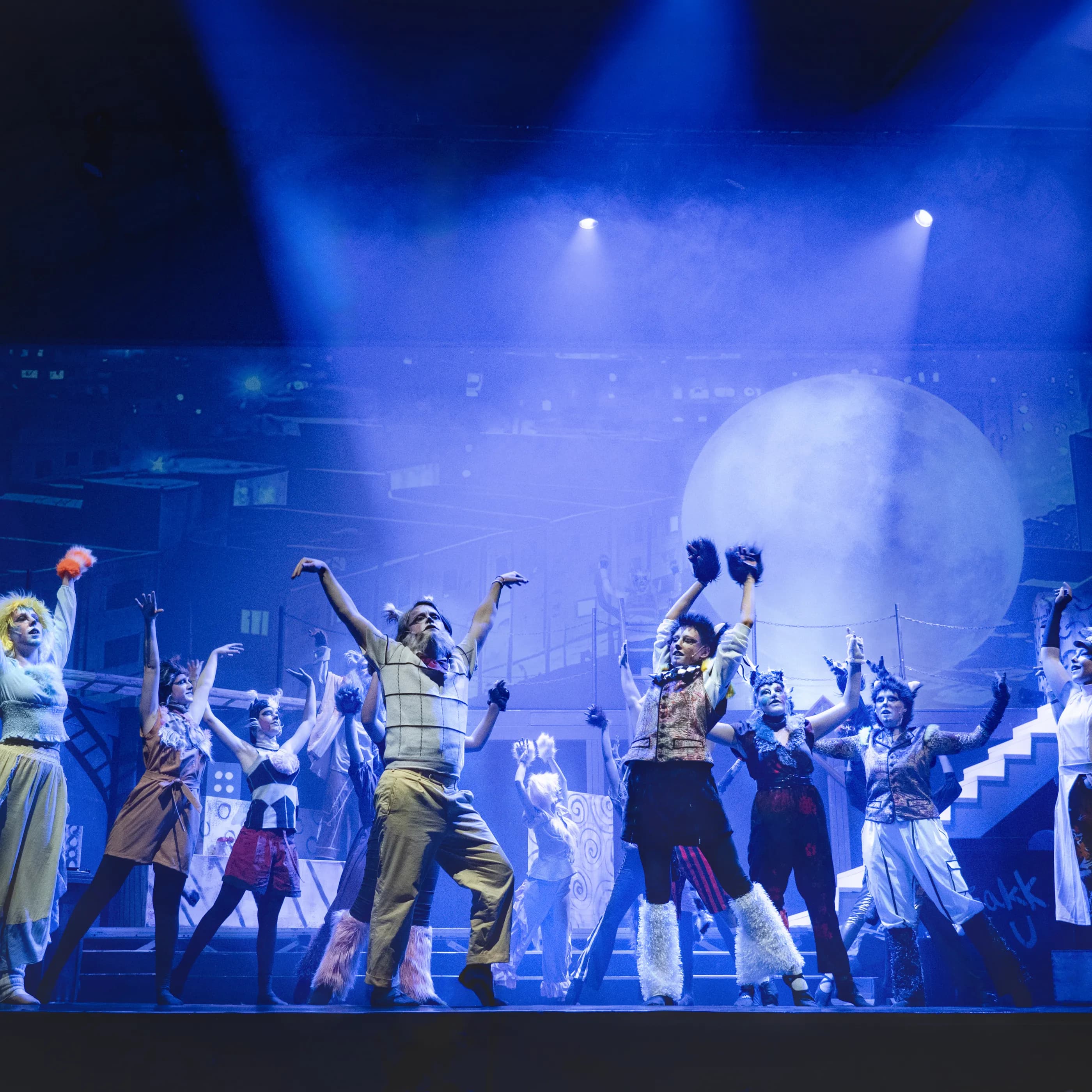
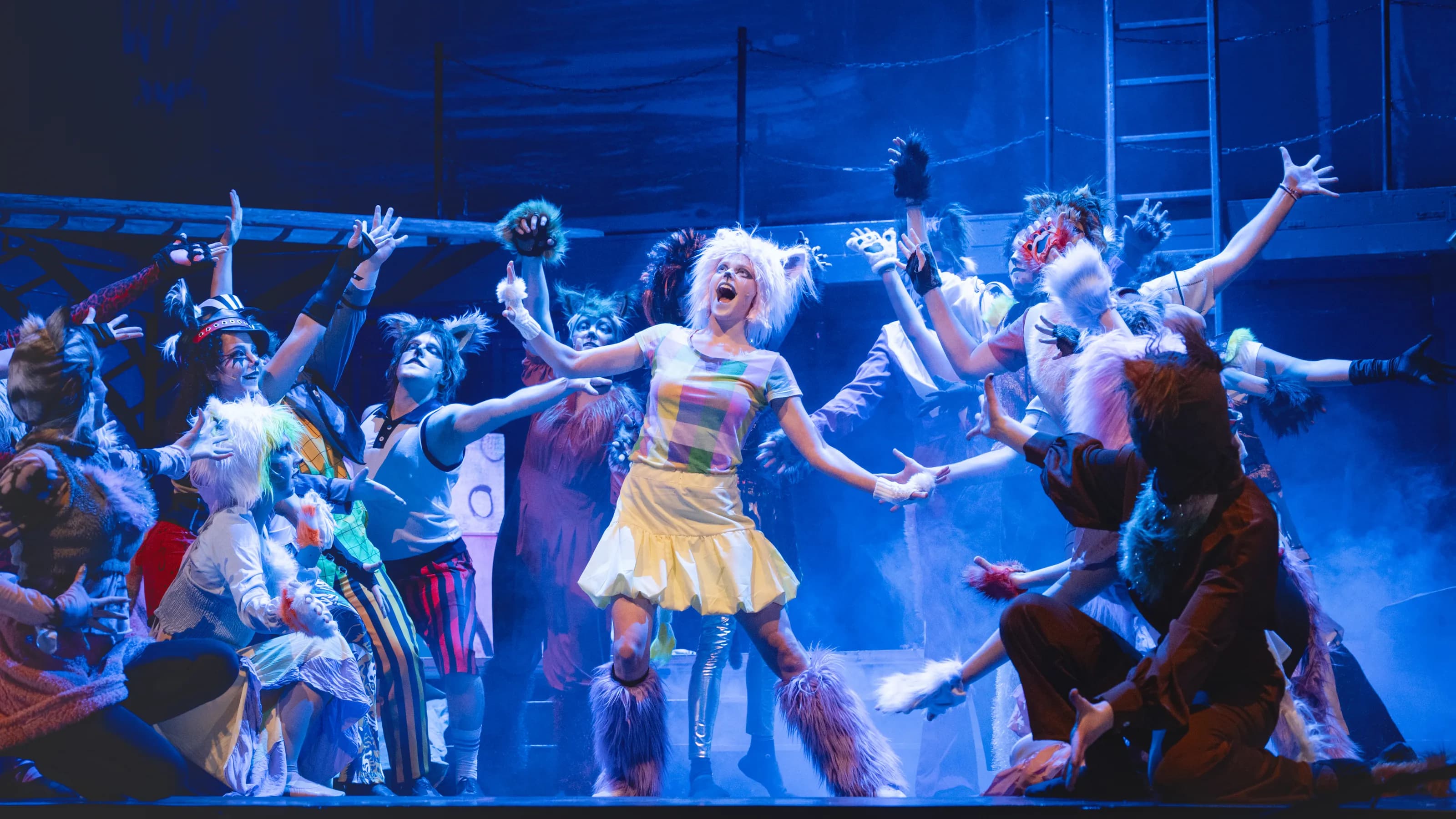
And this brings us to the real reason why I am writing this text at all. Because this year, the Akademie Immling – our youth program that trains young, aspiring singers and performers – is bringing "Cats" to the stage. And I assert: There is hardly a better piece to enable young talents to make the leap into professional musical theater.
Why? Because "Cats" is an ensemble piece. There is no single leading role on which the entire evening rests – instead, practically everyone in the ensemble gets their own musical moment. This means: Many young voices get to showcase themselves, many young talents get their solo appearance, their own number, their own chance to shine. For an academy that wants to provide young people with exactly this stage experience, this is worth its weight in gold.
In addition, there is the stylistic range of the score. Lloyd Webber did not stick to a single musical style here, but rather took a whole journey through genres: musical ballads, jazz, tango, music hall numbers, even hints of operatic singing. For young singers who are still figuring out which field, which style suits them, this is a special kind of training camp – in a single evening, they get to try out a whole musical universe.
And then there is the physical dimension. "Cats" demands not only singing but a complete physical transformation – movement, dance, body tension, presence. Those who learn as young people to sing while simultaneously moving choreographically demanding and embodying a character that must not be "human" for a second but must always remain a cat – they learn for their entire stage life. Hardly any other piece brings singing, dancing, and acting together so directly and so demanding as this one.
The Challenge for Young Singers
But – and here it gets honest – "Cats" is no walk in the park. On the contrary: It is one of the most demanding pieces that can be asked of young talents.
First, the voice itself: The score demands an enormous range, from delicate, vulnerable ballad tones to powerful, belting-like outbursts. Especially younger, not yet fully developed voices must learn to handle this range carefully without overexerting themselves.
Second, the physical endurance: Almost two hours of movement, in dance choreographies that are meant to imitate the movements of real cats – graceful, lurking, jumping, playful – all while singing simultaneously. Anyone who has ever tried to sing cleanly during intense physical exertion knows: that is an art form in itself.
Third, the acting task: Playing a cat without slipping into the silly, clichéd, or exaggerated, but bringing a real, independent personality to the stage – that is no small feat in acting. Especially young performers must learn to have the courage to reduce, to prioritize precision over showiness.
And fourth – perhaps the greatest challenge of all – the comparison. "Memory", the most famous number of the piece, is known by practically everyone, whether through Elaine Paige, Barbra Streisand, or countless other interpreters. Whoever sings this number does so with the awareness that the audience already has an expectation in their mind. For young singers, this means: having the courage to find their own version instead of copying – one of the most difficult but also most educational tasks that can be set for a young voice.
A Proven Team for a Demanding Piece
And one more thing is reassuring in such a demanding endeavor: The production is once again in the hands of the proven team Verena von Kerssenbrock (direction) and Judith Seibert (choreography). Those who know Verena von Kerssenbrock's work from past productions know that she has an infallible sense for creating great stage moments without losing sight of the individual characters – a quality that is just right for "Cats" with its large ensemble and many small character portraits. And since this piece is largely told through movement, Judith Seibert as choreographer is the crucial second half of this duo: She must work out the smooth, cat-like movement language from young, still-learning bodies that brings the piece to life. This is a stroke of luck for our young talents at the Akademie – they are not just being guided, but accompanied by two professionals who have relied on each other for years and know exactly how to bring out the best in each individual on stage.
Marina Meggle as Patron
That this demanding yet wonderfully opening piece is under the patronage of Marina Meggle fits perfectly into the picture. The Meggle family has been closely connected to the Immling Festival for many years, and that Marina Meggle supports the younger generation at the Akademie Immling is a beautiful sign of how much the idea of promoting young talents is carried forward here. A patronage is never just a title – it is a commitment: to the young people who are gaining their first major stage experiences here, and to a festival that not only adorns itself with established big names but consistently invests in the future.
Why You Shouldn't Miss This
Perhaps it is precisely this that makes this evening so special: You will not see seasoned veterans playing their hundredth performance, but young people giving their all because they know exactly what opportunity is being given to them here. This mix of nervousness, energy, dedication, and genuine joy in dancing and singing – that is a quality that cannot be bought with money, but is palpable every evening in the audience.
And by the way: If you have always wanted to know how a literary Nobel Prize winner indulges in cat poems, how nonsense verses became one of the most successful musicals of all time, and how young talents can grow with this piece – then this evening is just right for you.
See you on the hill.
Warm regards, Your Christiane Berker