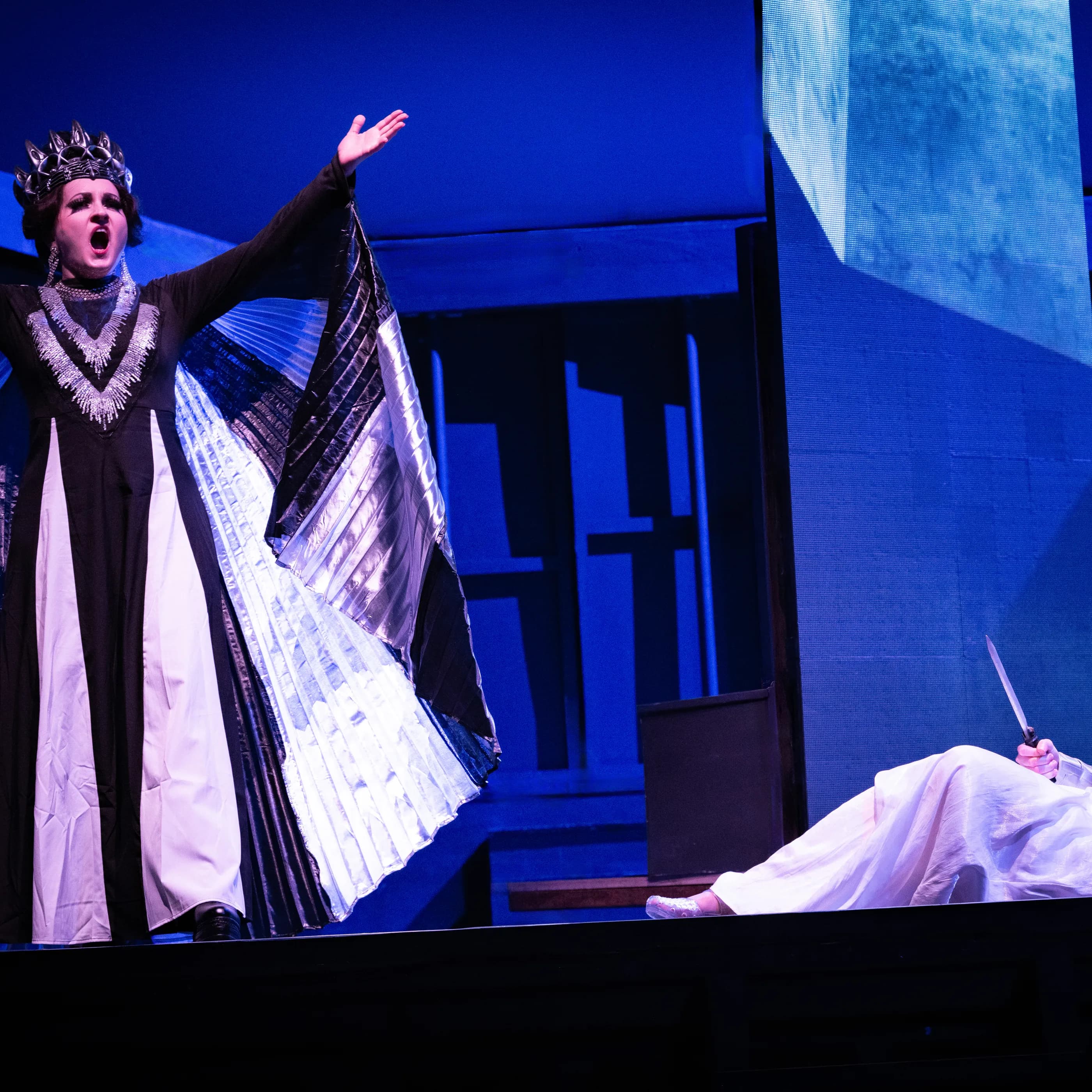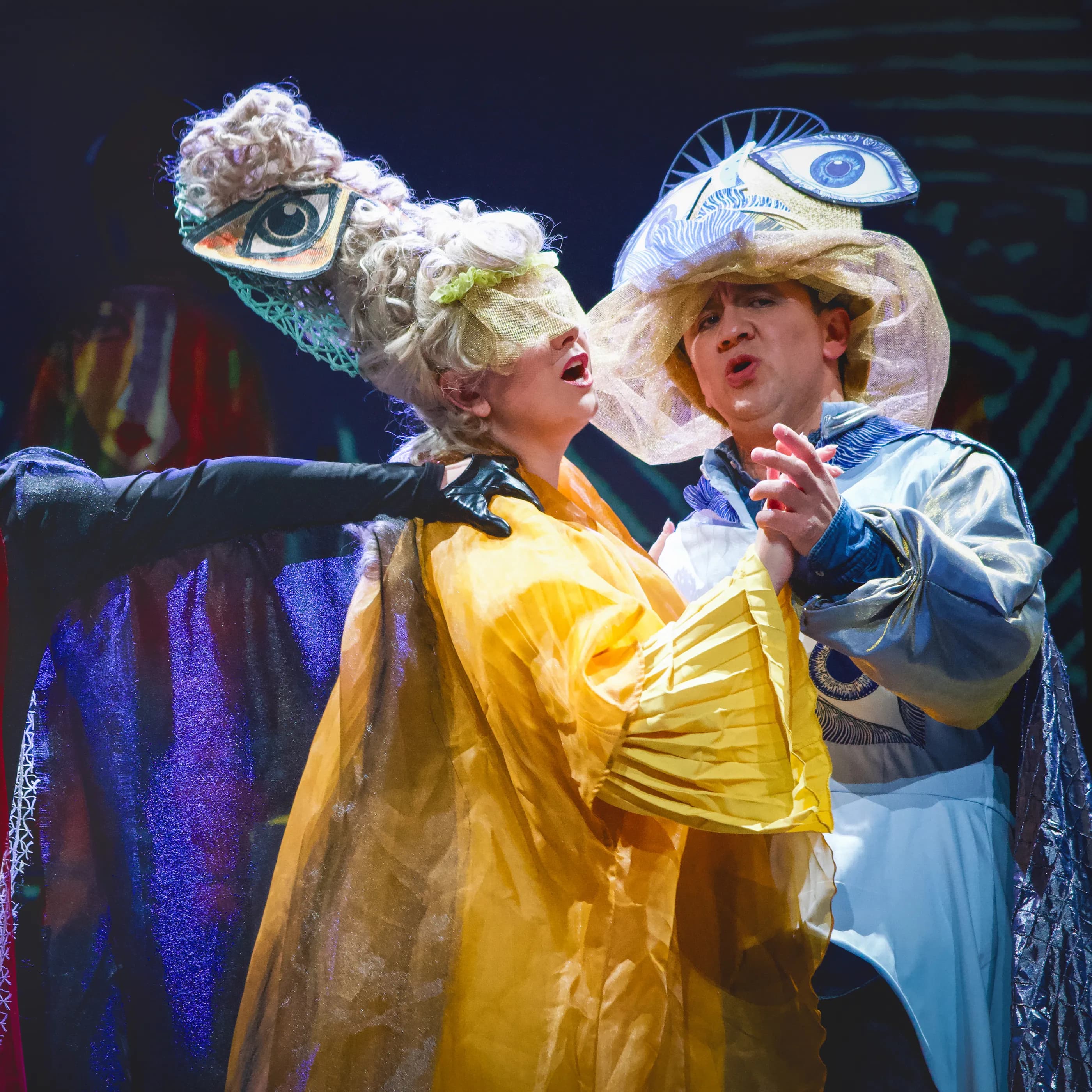
30 Years of Sound on the Hill: A Journey with Richard Strauss and Beethoven
Thirty years. For an opera festival, that is not an anniversary – it is a miracle. And like every miracle, it needs a story to explain it. This story is called: People who have decided to understand music not as a profession, but as a calling. People who come to this hill year after year – with their instruments, their voices, their passion – and together create something that is greater than any individual.
This anniversary evening tells exactly this story. In three chapters, with three works that are not randomly placed together: Richard Strauss’ Also sprach Zarathustra about the spiritual maturity that thirty years of making music together brings. Strauss’ Don Juan about the passion with which everyone is involved. And Beethoven’s 9th Symphony about what has characterized Immling for years: diversity that is not a backdrop, but lived everyday life. The audience is invited to join this journey.
Richard Strauss: "Also sprach Zarathustra" – The spiritual journey of the musicians
When a festival celebrates thirty years, the evening cannot simply begin. It must emerge. And that is exactly what "Also sprach Zarathustra" does. Those eight measures in which the universe is created – deep in the pedal point, then slowly rising in brass and timpani, until the chord explodes – are more than an opening. They are a statement: Here something begins. Again. For the thirtieth time.
Strauss composed the work in 1896 and did not intend to illustrate any philosophy with it. He was concerned with something else: the development of humanity from the first consciousness to the unfolding of its possibilities. That is exactly what thirty years of making music together can achieve. Anyone who develops an instrument or a voice over the years in an ensemble, who penetrates new scores season after season, meets new colleagues, faces new challenges – grows. Not just technically. Also internally.
"Zarathustra" sounds like this journey. For the festival orchestra, "Zarathustra" is both a challenge and a gift: The score demands precision in the high strings, dramatic power in the brass, and absolute silence in the pianissimo moments. It is considered one of the most technically demanding works for orchestra – and above all: an ensemble that knows where it wants to go. That can only be one thing, carrying thirty years of experience in the instruments.
"Man unfolds his possibilities." This also applies to a festival – and to everyone who plays on this hill.
Richard Strauss: "Don Juan" – The passion with which everyone is involved
The audience is captivated. The universe has been created. And now – now the stage is on fire. We see what truly drives these people.
"Don Juan" – created in 1888/89, when Strauss was just 24 years old – is not music for the indifferent. This symphonic poem releases more energy in less than twenty minutes than many symphonies in four movements.
"Don Juan" is a masterpiece for an excellent festival orchestra because it forgives no weakness: The horn passages are precisely set, the strings burn, the oboe solo touches. And all of this must breathe together – with a conductor who has everything under control and can simultaneously let go so that the music lives.
That is exactly the passion that defines the Immling Festival. No one plays here out of obligation. The musicians come to this hill because they want to – because they believe that this music, in this place, in this ensemble, is something special. "Don Juan" is the sound image of this conviction: music that truly lives only when everyone is fully present.
As the second piece of the evening, "Don Juan" represents the festival in full swing: no longer at the beginning, not yet at the goal – but in the midst of it all, with the full strength of those who know why they are here.
Then: Break. Time to catch your breath.
Beethoven: The Ninth – The diversity that Immling lives
There are musical works that transcend themselves. Beethoven's 9th Symphony in D minor op. 125 is one of them – the most striking example of what music can achieve when it stops being just music and starts to formulate a stance – when a symphony becomes a manifesto.
Ludwig van Beethoven wrote it between 1817 and 1824, largely already completely deaf. But what makes him immortal is the decision in the final movement: He added soloists and a choir – an unprecedented step in symphonic music at the time – and set Friedrich Schiller's "Ode to Joy" to music. "All men will become brothers" – this line sounds as radical today in a world full of conflicts as it did at the time of its creation. The Immling Festival embodies this: For many years, the festival has united artists from over 30 nations on stage, in the orchestra pit, and in the choir. No program booklet in the world formulates this more impressively than this cast list.
As the crowning conclusion of this evening, the Ninth is more than a program choice. After the spiritual awakening of "Zarathustra" and the blazing passion of "Don Juan," the choir now takes the stage – and with it the promise that this festival has fulfilled for thirty years: that music knows no boundaries, no languages, no origins. A festival choir that plays together in this formation sings the Ninth differently than any professional city theater ensemble. It sings it with shared rehearsal evenings, with the knowledge of the peculiarities of the acoustic tent on the hill – and with the pride of those who have found their way here from all over the world.
Beethoven's finale is not a full stop. It is a promise. And thirty years is the right time to say it out loud once again – with all voices, from all nations that know this hill.
Cornelia von Kerssenbrock: 25 Years in the Orchestra Pit of the Immling Festival
And then there is someone else who should actually be talked about the most: Cornelia von Kerssenbrock.
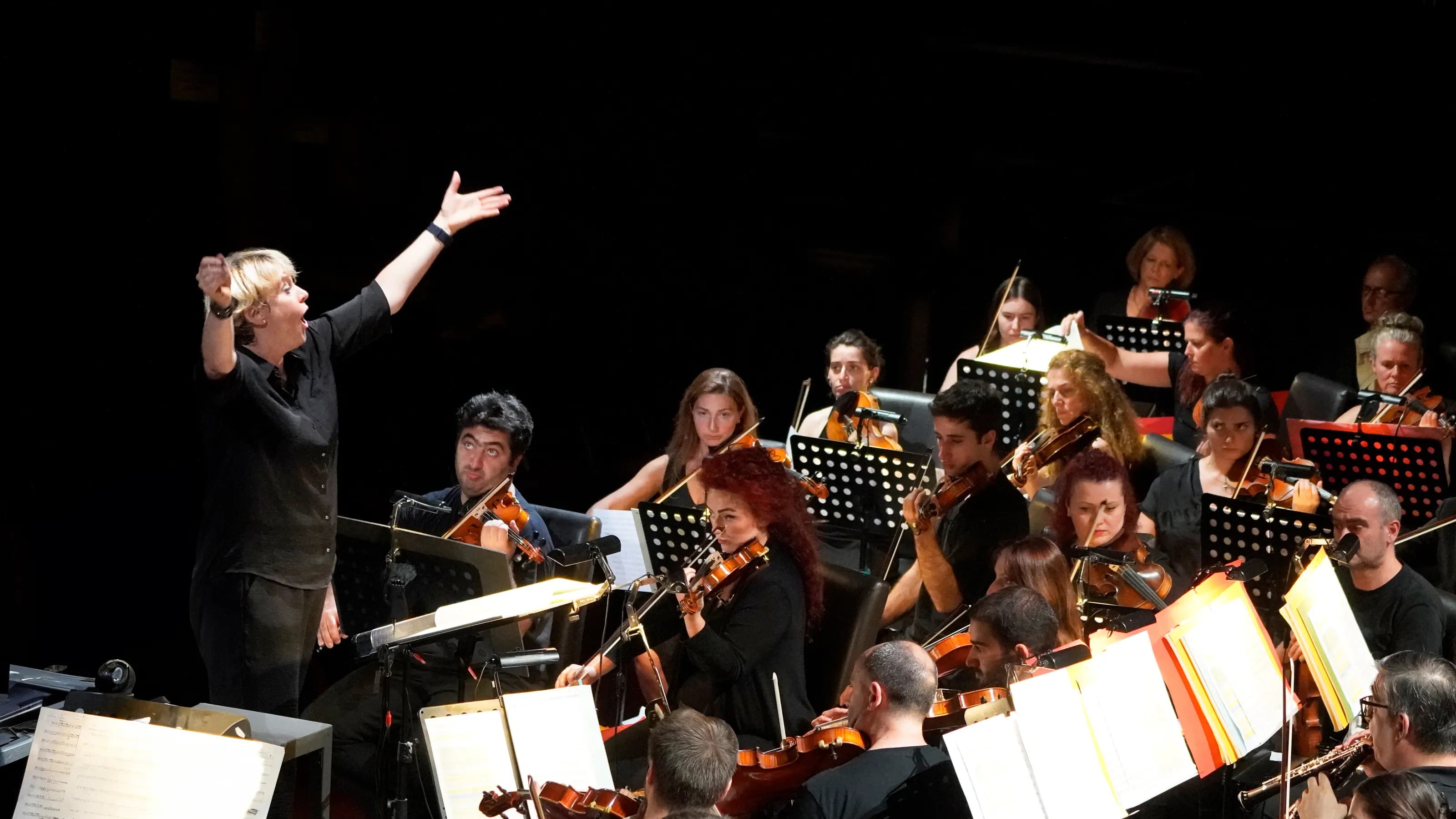
Anyone who knows opera festivals knows that the orchestra pit is not a cozy place. It is a place of precision, communication, and uninterrupted listening – to the singers, to the orchestra, to the space. A conductor who has worked there for twenty-five years has not just been lucky. She has achieved something.
Cornelia von Kerssenbrock celebrates her own anniversary this evening: 25 years of stage presence in the orchestra pit of the Immling Festival. This is remarkable – not only as a number but as proof of quality. Because anyone who accompanies a festival up close, who knows its singers, understands its orchestra, and simultaneously carries the musical vision of an evening, develops a familiarity with the sound body that no guest conductor brings.
Her qualities lie in a rare combination: technical precision that gives an orchestra apparatus security – and at the same time a musical sensitivity that allows players and singers the space to unfold. Anyone who has observed Cornelia von Kerssenbrock at work knows: She listens. She reacts. And she shapes without dominating. That she succeeds in shaping this evening – with its complexity, its drama, its diversity – into a cohesive experience is already a statement about what twenty-five years in this orchestra pit mean. It is a birthday gift: the best that a festival can give to its musicians, its audience, and itself.
Why you should definitely be there
The answer is simple: Because such evenings are rare.
This evening is a journey. It begins with a cosmic departure and the silent question: What are we capable of? It leads through the passion of those who have long found their answer. And it ends with the greatest choral finale in music history – sung by people from over thirty nations who together mean a sentence that Beethoven noted down two hundred years ago.
The audience is invited to join this journey. Not as spectators. As fellow travelers.
Thirty years of Immling Festival, twenty-five years of Cornelia von Kerssenbrock. These are not just numbers. This is a story. And on this evening, you can experience another chapter of it.
We will see you on the hill in Chiemgau!
As always, warmly
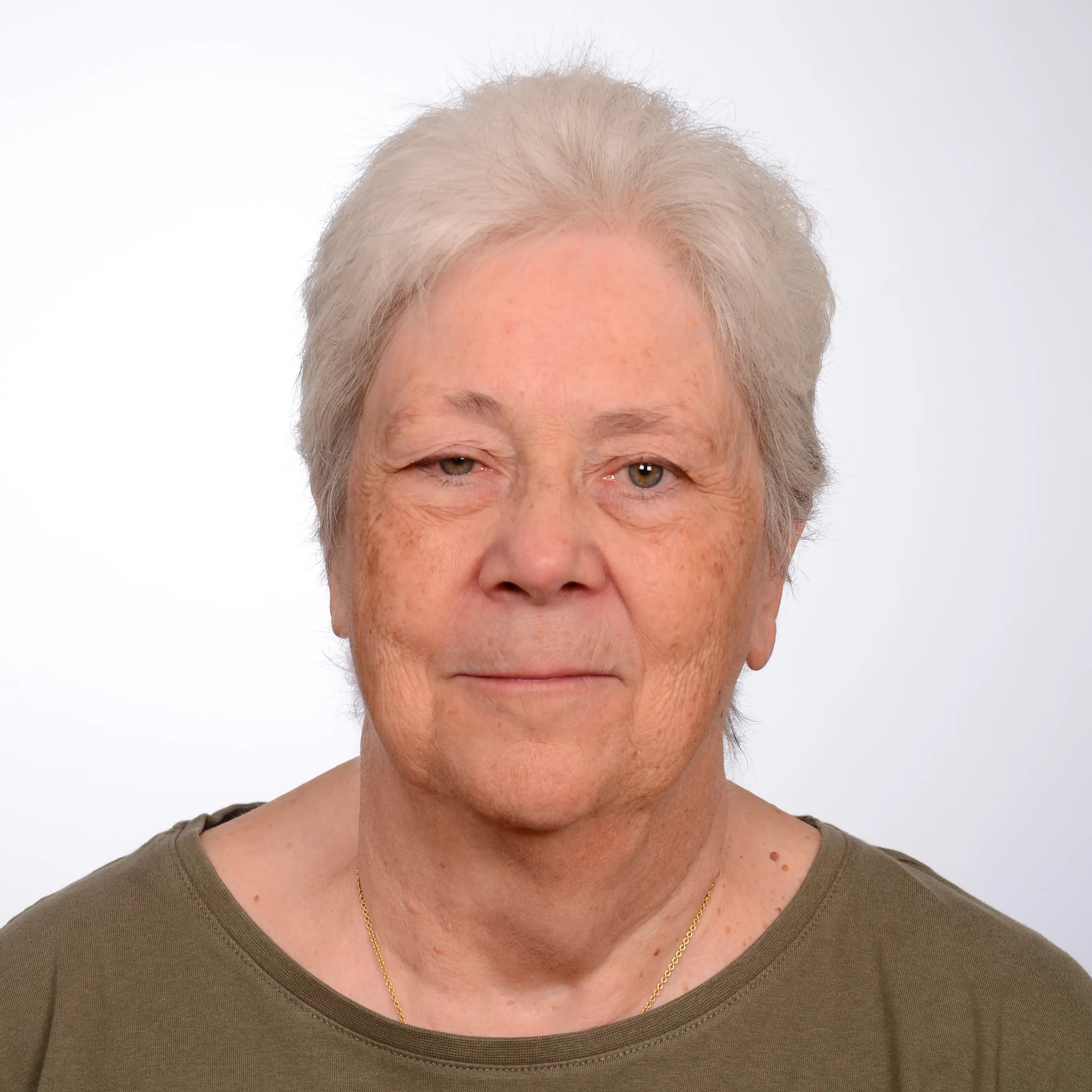
Yours, Christiane Berker